Chimneys in Fairfield draw wildlife for one reason: an uncapped flue is a dry, sheltered vertical shaft. Chimney swifts, European starlings, and pigeons nest in the smoke chamber, especially in older Cement Hill and…
Chimneys in Fairfield draw wildlife for one reason: an uncapped flue is a dry, sheltered vertical shaft. Chimney swifts, European starlings, and pigeons nest in the smoke chamber, especially in older Cement Hill and Waterman Estates homes with clay flue tile and no cap. Raccoons climb the exterior brick and drop in to den with kits in spring. A flue opening as small as 4 inches lets a starling in; a 6-inch gap admits a squirrel. If you hear scratching, smell ammonia, or see twigs at the damper, an animal or nest is the likely cause, and a partially blocked flue backs smoke and carbon monoxide into the room, which is why NFPA 211 treats obstructions as a Level 1 inspection finding.
Removal follows a set sequence. First, the flue is scoped from the top and the firebox to locate the animal or nest and confirm the species, this decides the method. Second, a live bird trapped low is guided out or lifted from the smoke shelf; a nest is removed by hand and with rods from above. Third, the flue is cleaned out so no packed debris remains to smolder on the first fire. Fourth, the top is capped. Nesting season matters: California protects active native bird nests, so a nest with eggs or chicks may have to wait until the young fledge before the flue is cleared and capped, an edge case worth raising when you get some quotes.
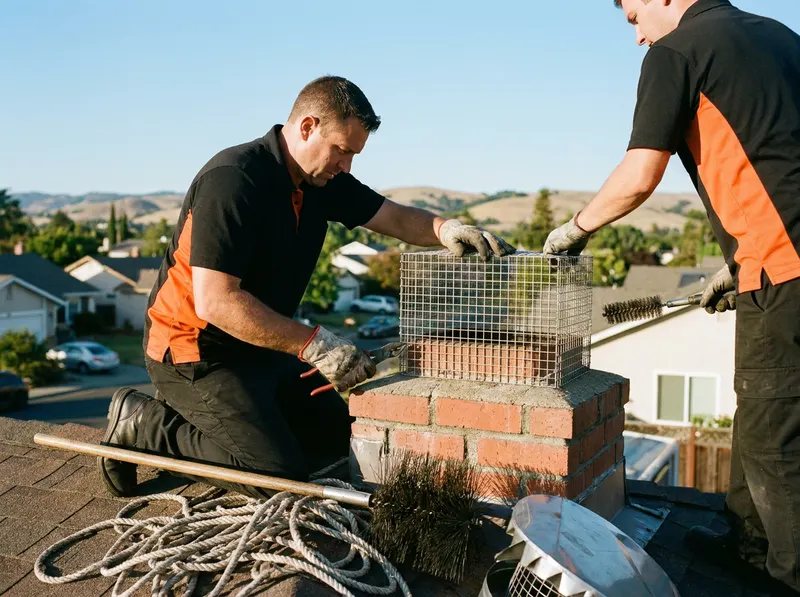
The cap is the part that keeps the problem from returning. A spark arrestor is a mesh screen over the flue that does two jobs at once: it stops embers from landing on a roof and it keeps birds, raccoons, and squirrels out. NFPA 211 and the California Building Code call for spark arrestor mesh with openings no smaller than 3/8 inch and no larger than 1/2 inch. Galvanized caps rust within a few Suisun Valley winters; a custom 316 stainless mesh animal spark arrestor resists corrosion from marine air off the Suisun Marsh and typically lasts 15, 20 years. For non-standard oval or oversized flues common in Green Valley and Rancho Solano custom homes, a cap is fabricated to the measured opening rather than forced from a stock size.
Decision guidance: if you have a single active nest and a standard round flue, a straightforward removal plus a stock 316 stainless cap fits and stays at the low end of the range. If raccoons have denned in a large masonry flue in Paradise Valley or an oversized rectangular flue in Villages at Fairfield, a custom chimney animal guard sized to the exact opening is the durable answer, and it costs more because it is built to measure. If you only want to keep the raccoons out and the flue is already clean, a cap-only install is the simplest fix. Every removal includes a Level 1 visual check; a Level 2 inspection with a camera is warranted after a chimney fire, a sale, or when a fireplace change is involved, per CSIA guidance. A free on-site estimate confirms flue size and the exact figure before any work begins.
Every job gets a firm, written price after a free on-site visit.
Tell us about your animal removal & spark arrestor job in Fairfield and we'll send a clear, written quote, usually the same day.
 Fluewise Chimney Sweep