A chimney water leak in Fairfield almost always traces to one of four failure points, and identifying which one saves money by avoiding blind sealing. The chimney crown, the concrete or mortar slab on top, cracks with…
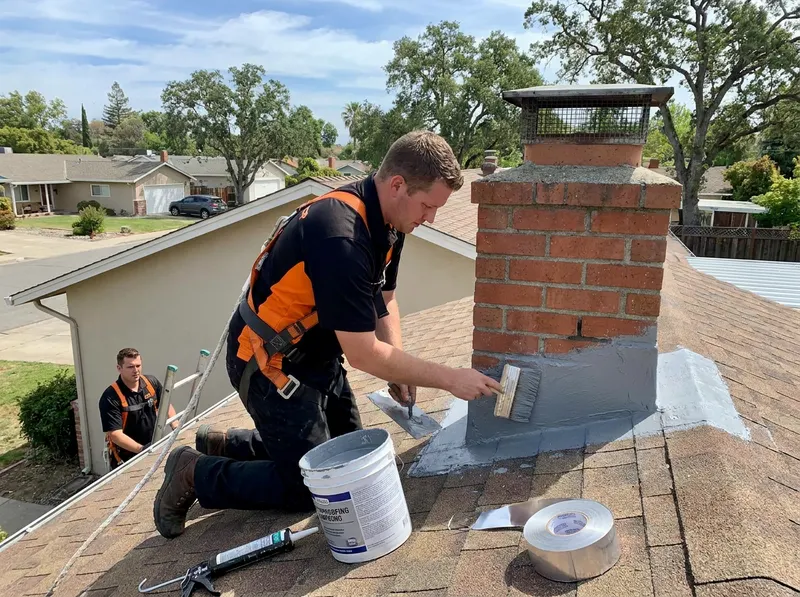
A chimney water leak in Fairfield almost always traces to one of four failure points, and identifying which one saves money by avoiding blind sealing. The chimney crown, the concrete or mortar slab on top, cracks with age and lets water soak straight down through the masonry. The metal flashing where the chimney meets the roof loosens or corrodes, which shows up as a stain on the ceiling near the chimney chase. A missing or rusted chimney cap lets rain fall directly into the flue. Spalled brick and open mortar joints wick water in through the side of the stack. A Level 1 inspection covers readily accessible areas and confirms an obvious source; a Level 2 inspection, defined under NFPA 211, adds the roof, attic, and a video scan of the flue when the leak path is not visible from the ground.
Decision-fit is straightforward. If the stain sits directly against the ceiling where the chimney passes through, flashing repair or replacement is the likely fix, sealant on top of failed flashing is a temporary patch, not a repair. If water shows inside the firebox or smells of wet ash, the crown or cap is the more probable source. If the brick itself darkens and stays damp after rain but there is no interior leak, waterproofing the masonry with a breathable siloxane-based repellent is the correct step; solvent-based paints or non-permeable sealers trap moisture inside the brick and accelerate spalling, so the Chimney Safety Institute of America (CSIA) recommends vapor-permeable products that let the masonry dry outward. Waterproofing is preventive, it does not repair an existing crack, so a cracked crown is sealed or rebuilt first, then coated.
Fairfield's weather makes chimney leaks a seasonal problem. Homes in Green Valley, Rancho Solano, and the hillside lots near Cement Hill catch wind-driven rain off the Coast Range that pushes water into west-facing mortar joints. Older masonry in Suisun Valley and Cordelia often has the original 1970s and 1980s crowns, which are the most common source of slow crown leaks in the area. Newer chase-style chimneys in Villages at Fairfield, Laurel Creek, and Paradise Valley leak most often at the metal chase cover and flashing rather than the masonry. Gold Ridge and Waterman Estates homes near open ground see more cap and spark-arrestor rust from exposure. A leak found in one summer dry spell is far cheaper to seal than one left through a full rain season.
The process runs in order: first the source is located and photographed; second the failed component, crown, flashing, cap, or joint, is repaired or replaced; third the exterior masonry is cleaned and allowed to dry; fourth a water repellent is applied and left 24 to 48 hours to cure. A free on-site estimate confirms which of these steps a specific chimney actually needs, since a $350 waterproof coating and a $1,200 crown rebuild solve different problems and are not interchangeable.
Every job gets a firm, written price after a free on-site visit.
Tell us about your chimney leak repair & waterproofing job in Fairfield and we'll send a clear, written quote, usually the same day.
 Fluewise Chimney Sweep