Masonry chimneys in Fairfield fail in a predictable order, and the repair matches the stage of damage. A chimney that has hairline cracks in the crown or gaps in the mortar joints usually needs chimney crack repair and…
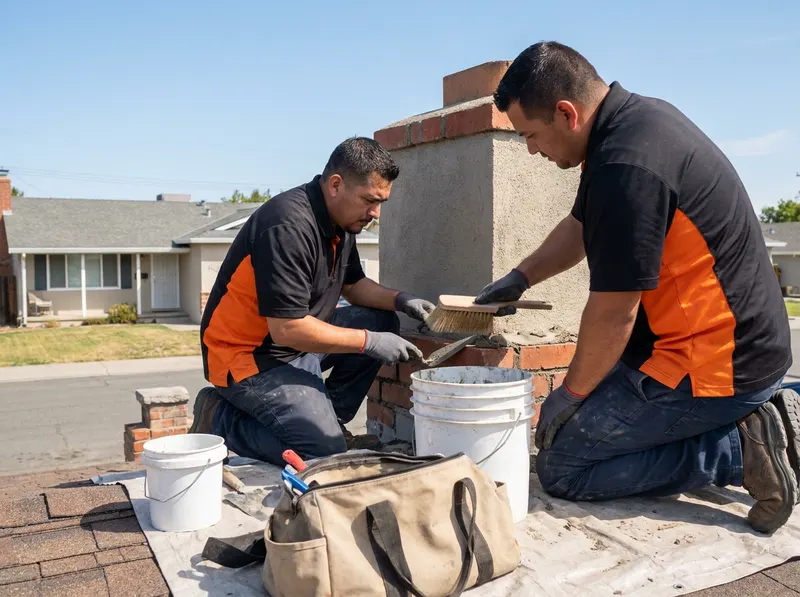
Masonry chimneys in Fairfield fail in a predictable order, and the repair matches the stage of damage. A chimney that has hairline cracks in the crown or gaps in the mortar joints usually needs chimney crack repair and repointing, not a rebuild. When a car, a fallen tree, or a wind event has knocked about half the chimney down and put cracks in the rest of it, the job shifts to a partial or full replacement of the chimney. The difference is judged on the ground: cracked but plumb and anchored means repair; leaning, spalling stone, or a separated flue means rebuild.
Stone chimneys common in older Green Valley and Suisun Valley homes shift over decades as mortar washes out and the structure settles. Chimney stone resets pull the loose stones, clean the beds, and relay them in fresh Type N or Type S mortar so the courses sit true again. This suits a chimney where the stones are intact but no longer bonded. A full chimney rebuild is the fit when the stone or brick itself is crumbling, the crown has failed, or the chimney has pulled away from the roofline flashing on homes in Cordelia, Rancho Solano, or Paradise Valley. The trade-off is straightforward: a reset preserves the original stone and costs less, while a rebuild replaces failed material and resets the structure to code, which takes longer and costs more.
Inspection precedes any masonry work. A Level 1 inspection under NFPA 211 covers readily accessible parts and suits a chimney with no known damage. A Level 2 inspection adds accessible attic, crawl-space, and roof areas plus a flue scan, and is the standard after an impact, a fire, or a property sale. The Chimney Safety Institute of America (CSIA) publishes these inspection levels; a Level 2 is the baseline before quoting a rebuild, because internal flue damage is not visible from the firebox alone. Fairfield's clay-heavy soil in areas like Cement Hill and Gold Ridge moves in wet winters, which is why foundation cracks at the chimney base are checked, not just the visible stack.
A rebuild follows a fixed sequence. First, the chimney is inspected and photographed and a written scope is issued. Second, the unsafe section is dismantled to a sound course, brick by brick or stone by stone. Third, new footings or the existing base are verified. Fourth, the stack is relaid, a new crown is poured with a drip edge, and flashing is tied back into the roof. Fifth, the flue liner is confirmed to NFPA 211 clearance requirements before the first fire. Homes near Travis Air Force Base and the Villages at Fairfield with taller two-story stacks add scaffolding time, which is reflected in the estimate rather than hidden in a flat rate.
Pricing here is a market-range ballpark, not a fixed price, because chimney height, stone versus brick, roof pitch, and access all move the number. The exact figure is confirmed on the free on-site estimate. Photo documentation and written findings come with every inspection so a homeowner in Laurel Creek or Waterman Estates can see what was found and why the recommended scope fits.
Every job gets a firm, written price after a free on-site visit.
Tell us about your chimney masonry & rebuild job in Fairfield and we'll send a clear, written quote, usually the same day.
 Fluewise Chimney Sweep